
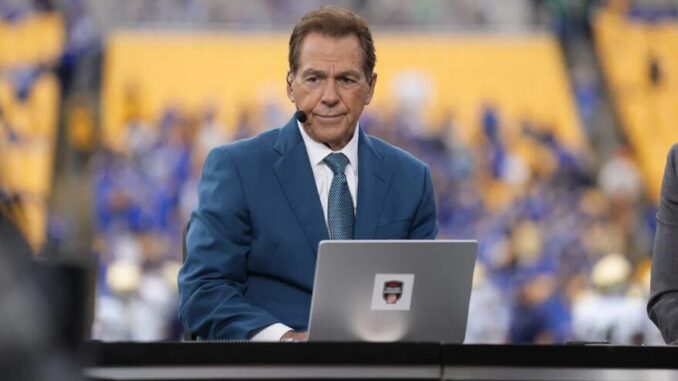
Utah Football Player Supports Nick Saban’s Call for Reform in College Athletics
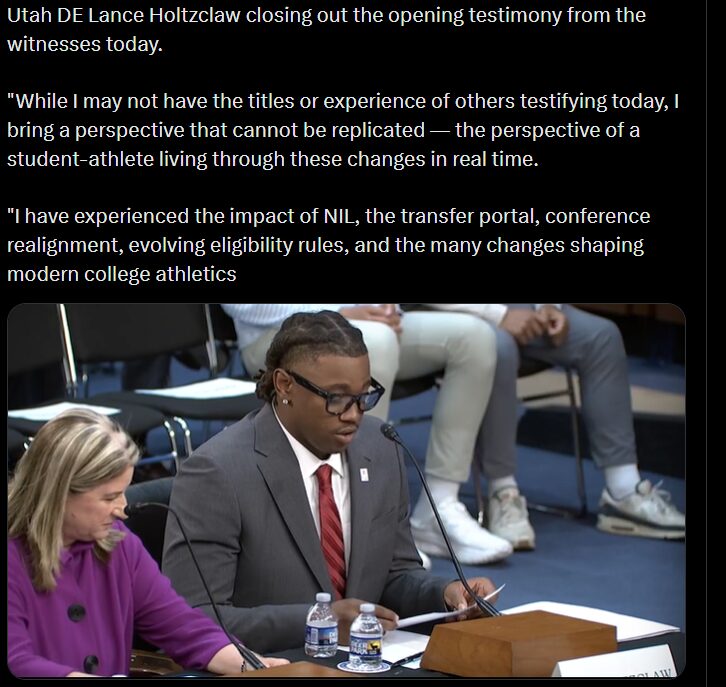
During a Senate Commerce Committee hearing focused on the proposed “Protect College Sports Act,” former Alabama head coach Nick Saban voiced concerns about the growing influence of agents in college athletics. According to Saban, the current NIL and transfer portal environment has created opportunities for some agents to prioritize financial gain over the long-term interests of student-athletes. His concerns were echoed by Lance Holtzclaw, a defensive end at Utah, who testified alongside him and shared similar experiences.
Holtzclaw told lawmakers that agents often play a significant role in shaping athletes’ decisions, particularly because their compensation is frequently tied to the earnings secured by the players they represent. As a result, he argued that some agents have incentives to encourage moves that may not always benefit the athlete’s development or future opportunities.
Saban made it clear that he is not opposed to players transferring schools when necessary. He acknowledged that athletes should have the freedom to leave situations that are not working for them. However, he expressed concern about repeated transfers driven by financial promises rather than athletic or academic considerations.
One of Saban’s primary criticisms involves the fees charged by agents. He noted that some representatives take substantial percentages of athletes’ NIL earnings, even though many players who enter the transfer portal never secure better opportunities. Holtzclaw agreed, emphasizing that student-athletes need to better understand that agents are supposed to serve their clients—not the other way around.
According to Holtzclaw, excessive fees and poor representation can harm athletes and the broader college sports landscape. He stressed the importance of educating players about their rights and responsibilities when working with agents.
Drawing from personal experience, Holtzclaw said he has encountered both positive and negative examples of athlete representation. While he has worked with agents who acted professionally, he has also seen teammates become frustrated by agents who provided little value while taking significant portions of their earnings. Those experiences led him to support stronger oversight and certification requirements for agents operating in college athletics.
Saban echoed those concerns, arguing that some agents actively encourage athletes to enter the transfer portal solely to create new financial opportunities for themselves. In many cases, he said, there is no guarantee that players will receive better NIL deals or improved circumstances after transferring. For that reason, he believes agents should face stricter regulations and accountability standards.
The proposed legislation would introduce new limitations on transfers. Under the current framework being discussed, athletes would receive one unrestricted transfer during their undergraduate careers. Any additional transfer would require the athlete to sit out a season unless specific hardship exceptions apply.
Saban supports those restrictions, arguing that unlimited transfers have effectively created a form of free agency in college sports. Combined with NIL compensation, he believes the current system encourages bidding wars for players and opens the door to tampering by outside programs and representatives.
Tampering has become one of the most controversial issues in modern college athletics. During his testimony, Saban referenced a recent case involving linebacker Luke Ferrelli, who initially transferred from California to Clemson before quickly entering the portal again and ultimately joining Ole Miss. The situation sparked allegations of outside interference and highlighted the challenges schools face in regulating player movement.
Beyond transfer issues, Saban also pointed to growing concerns surrounding eligibility disputes, NIL regulations, and the lack of a consistent national framework governing college sports. Cases involving athletes seeking additional years of eligibility have further complicated an already evolving landscape.
Holtzclaw emphasized that student-athletes are experiencing these changes firsthand. He explained that today’s players must navigate NIL opportunities, transfer decisions, conference realignment, and shifting eligibility rules, all while balancing academic and athletic responsibilities.
Because of those challenges, both Holtzclaw and Saban urged lawmakers to establish clearer national standards. Saban argued that college athletics is in urgent need of structure and consistency, warning that without congressional action, every attempt to create rules will continue to face legal challenges.
In his view, a comprehensive federal framework would provide the stability needed to protect student-athletes, regulate agents, reduce tampering, and preserve the integrity of college sports. As the debate over the future of NIL and the transfer portal continues, voices from both coaches and players are increasingly calling for reforms that balance athlete freedom with long-term sustainability.
Leave a Reply