
Texas Rangers Must Create Genuine Position Battles Ahead of Next Spring Training
As the Texas Rangers prepare to return to Surprise for spring training, more players could find themselves fighting to secure their places on the roster.
As the Texas Rangers reviewed their disappointing 2026 campaign, one major weakness stood out: the organization lacked sufficient depth to handle injuries and underperformance throughout the season.
That shortage became increasingly problematic when injuries affected key players such as Corey Seager, Wyatt Langford and Danny Jansen. Texas responded by bringing in free agents, including catcher Elias Diaz and infielder Nicky Lopez, both of whom proved to be useful additions.
However, the Rangers might have avoided some of those midseason moves if they had developed stronger depth within the organization. Building that depth requires meaningful competition, and the team’s leadership believes there was not enough of it during spring training.
Manager Skip Schumaker indicated that the approach could change when the team gathers in Surprise next year.
“I think that brings out the best in the player, and that’s why I think this offseason is going to be big for a lot of guys coming into spring training to fight for a position,” Schumaker said.
Rangers Preparing for More Intense Spring Training Battles
Although Texas brought more than 70 players to Major League spring training last February, there were only two significant battles for starting roles.
One competition centered on second base, where several players attempted to fill the vacancy created by Marcus Semien’s offseason trade to the New York Mets. The other involved the fifth spot in the starting rotation, with Kumar Rocker and Jacob Latz competing for the opportunity.
Rocker ultimately secured the rotation spot, while Latz went on to become an All-Star closer.
Beyond those two situations, most of the starting lineup was already established before spring training began. Many players brought in to compete for roster positions eventually ended up with Triple-A Round Rock, and several subsequently pursued opportunities elsewhere through free agency.
The lack of reliable alternatives became particularly noticeable when certain positions failed to deliver offensively.
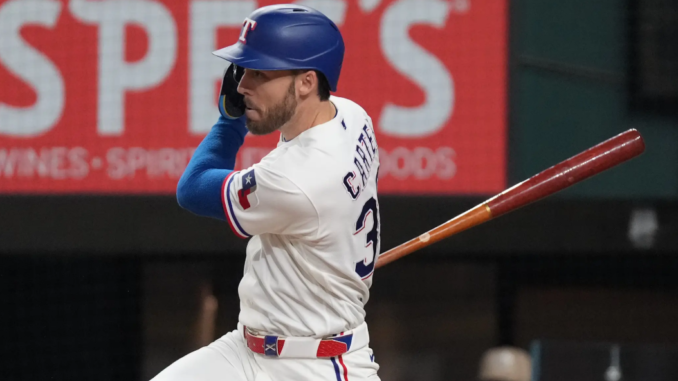
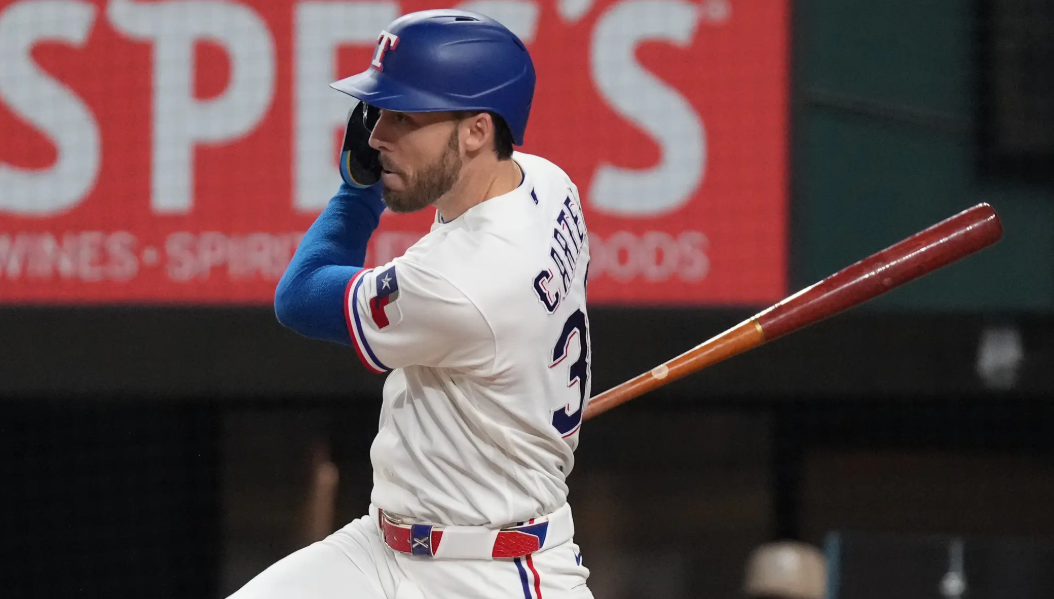
Center field was one example. Evan Carter remained healthy for much of the season but struggled at the plate, finishing with a batting average below .200. As the season progressed, Texas turned to Ezequiel Duran in center field against left-handed pitchers.
The Rangers also had limited alternatives when first baseman Jake Burger experienced offensive struggles.
Elsewhere, the team found itself scrambling for solutions when injuries affected its pitching depth. Jack Leiter’s placement on the injured list created an opportunity for Cal Quantrill to step in. Meanwhile, Texas had few reliable options to turn to when Rocker struggled in his role as the fifth starter.
These situations highlighted the risks of entering a season with limited competition and insufficient backup options.
Both Schumaker and general manager Chris Young have expressed a desire for a more competitive spring training. Rather than simply filling out the roster with players unlikely to challenge established starters, the Rangers want legitimate contenders capable of winning jobs.
The objective is to ensure that players cannot assume their positions are guaranteed and that the organization has dependable alternatives when injuries or poor performances arise.
“When you have multiple guys fighting for one spot, I think that is really, really healthy, and you’re in a really good spot as an organization,” Schumaker said.
Texas Rangers Eye a Different Approach for 2027
After entering the 2026 season with a largely predetermined lineup, the Rangers appear ready to reconsider their roster-building strategy ahead of 2027.
Creating genuine competition throughout spring training could help the team identify its strongest performers, improve organizational depth and provide greater flexibility when challenges emerge during the regular season.
The Rangers’ experience this year demonstrated how quickly a lack of dependable alternatives can become a problem. By bringing in more players capable of challenging for starting roles, Texas hopes to avoid similar difficulties next season.
Ultimately, the goal is not simply to assemble a larger group of players for spring training. It is to build a roster in which competition produces better performances, stronger depth and improved results when the 2027 campaign begins.
Leave a Reply