

New Athletic Director and Rutgers Alumna Sets Out to Build a “ like a return home. She is the daughter of a former Rutgers football player, the granddaughter of a Rutgers science professor, and a Rutgers alumna herself. Sports have been a major part of her life, from starringChampionship Climate”
From her office in the Golden Dome, Rutgers University–Newark’s new athletic director, Megan Haughey, has a clear view of the basketball court below, where local middle school students participate in a summer program.
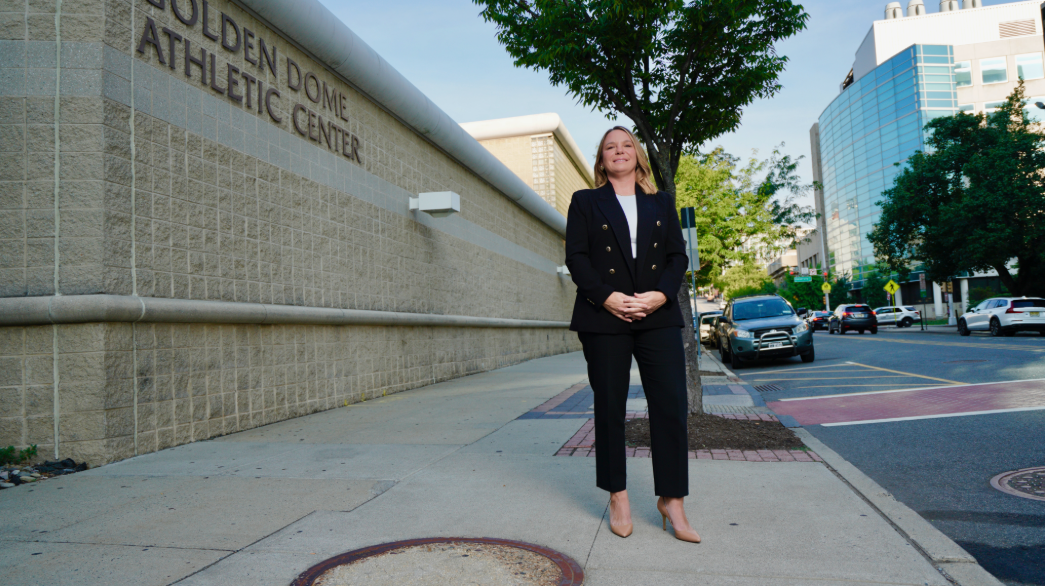
For Haughey, taking over at Rutgers–Newark feels like a return home. She is the daughter of a former Rutgers football player, the granddaughter of a Rutgers science professor, and a Rutgers alumna herself. Sports have been a major part of her life, from starring in basketball during high school to spending nearly 25 years coaching women’s basketball. She spent 14 years at Stevens Institute of Technology, eventually becoming deputy athletic director.
“Sports have played a huge role in my life,” Haughey said. She credited athletics with helping shape her friendships, relationships, toughness, resilience, and ability to overcome challenges.
Now, Haughey is bringing that experience to Rutgers–Newark with an ambitious but deliberate plan for the university’s athletics department. Her long-term objective is to create what she calls a “championship climate”—an environment where Rutgers–Newark teams compete at a high level while attracting strong support from students, faculty, and the Newark community.
Haughey believes championships are the result of building the right culture and establishing a strong process. She also wants student-athletes to feel valued from the moment they arrive, understanding that representing Rutgers–Newark is both meaningful and prestigious.
Her vision, however, goes beyond the university’s Division III athletic teams. Haughey wants to expand recreational opportunities for students and faculty through intramural sports, fitness programs, and outdoor activities, including hiking, canoeing, beach trips, and visits to local parks. She believes recreation and wellness can strengthen students’ connection to campus and contribute to their overall college experience and retention.
She also plans to expand programming at the Golden Dome swimming pool by introducing offerings such as lifeguard certification, swimming lessons, and programs for Newark residents and young people.
Community engagement is another major part of Haughey’s strategy. She hopes to bring K-12 students from Newark schools to Rutgers–Newark athletic events and turn game days into community-wide experiences. Her goal is for the Golden Dome to become a familiar destination for Newark residents, where young people can experience college athletics and connect with the Scarlet Raiders.
Rutgers–Newark Chancellor Tonya Smith-Jackson believes Haughey is well suited for the role, particularly because of her emphasis on strategic planning, execution, athletics, recreation, and student development. She sees investment in these areas as an investment in the overall well-being and success of students.
Haughey also brings extensive coaching experience to her new administrative position. After earning a master’s degree in social work from Rutgers–New Brunswick, she spent more than a decade mentoring other coaches. In her view, effective coaches are those who genuinely care about their athletes as people, communicate well, help players develop beyond the court, and know how to guide their teams through difficult periods.
She also recognizes that coaching has evolved as a new generation of student-athletes seeks greater involvement in the process. Haughey believes coaches must develop authentic relationships with their players and allow them to understand their coaches as people.
That philosophy influenced her first coaching hire at Rutgers–Newark. Haughey selected Alyssa Parsons, the former Division I athlete and head women’s basketball coach at Albright University, to lead the Scarlet Raiders. Haughey praised Parsons for her energy, passion, basketball knowledge, teaching ability, and commitment to putting her players first as people.
Haughey’s own coaching journey began long before she entered athletic administration. She grew up on a dairy farm in Hunterdon County in a family deeply connected to sports. Her father, Dennis Haughey, a 1979 Rutgers graduate, played defensive tackle for the Scarlet Knights and also competed in wrestling before later coaching high school football and wrestling.
At North Hunterdon High School, Megan competed in soccer, basketball, and softball before playing college basketball at Lafayette College, where she studied history. At just 21 years old, she became New Jersey’s youngest varsity head basketball coach when she took over the girls’ program at Phillipsburg High School, where she also taught history.
Phillipsburg had won only one game the previous season, but Haughey quickly helped turn the program around, leading the team to double-digit victories within a year. She describes herself as a builder who enjoys taking programs that need direction and giving them energy, passion, and a clear plan.
Haughey has also spent 15 years working with United NJ, a nonprofit youth basketball organization, serving as a coach, mentor, and director. At Stevens Institute of Technology, she became the winningest coach in the history of the women’s basketball program while taking on leadership responsibilities within the athletic department.
Her Stevens teams made five NCAA tournament appearances, won conference championships, and earned recognition for their academic success. Her experience there also strengthened her appreciation for Division III athletics, where student-athletes compete primarily because of their passion for the sport while balancing academics and other responsibilities.
At Rutgers–Newark, Haughey plans to build on that philosophy by introducing life-skills programs, time-management workshops, and partnerships throughout the university. She sees college as an important period of personal transformation and finds fulfillment in helping student-athletes prepare for careers and life after graduation.
Haughey is particularly impressed by the determination of Rutgers–Newark’s student-athletes. She believes their willingness to overcome challenges reflects the character of Newark itself. The university’s diversity was also a major factor in attracting her to the position, giving students daily opportunities to interact with people from a wide range of backgrounds and experiences.
While Haughey wants Rutgers–Newark to strengthen its reputation as a Division III athletics leader, she also hopes to create a stronger connection between the campus and Rutgers’ identity as a Big Ten university.
She believes the Rutgers name and the iconic block “R” provide an opportunity to build pride across the entire university. Even though Rutgers–Newark athletes compete at the Division III level, Haughey wants them to recognize that they are part of a much larger Rutgers community and brand.
Leave a Reply