
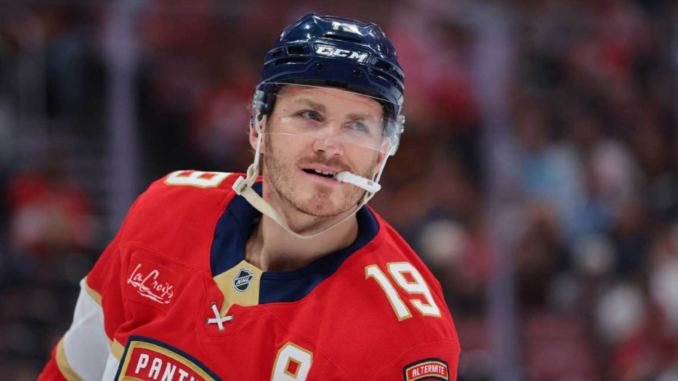
Panthers’ Biggest Roster Concern Heading Into the 2026-27 NHL Season
The Florida Panthers appear to have the pieces to return to Stanley Cup contention in 2026-27. After an injury-plagued season that kept them out of the 2026 Stanley Cup Playoffs, Florida enters the new campaign healthier and with several significant additions. Still, one major weakness could ultimately determine how successful this team becomes.
The Panthers endured a brutal 2025-26 season after dealing with injuries throughout the year. Matthew Tkachuk, Dmitry Kulikov, and Brad Marchand all missed substantial stretches, while Aleksander Barkov was sidelined for the entire season.
The disappointing campaign came just one year after Florida won its second consecutive Stanley Cup. The Panthers had established themselves as one of the NHL’s dominant teams during the middle of the decade and appeared to be building a legitimate dynasty. Missing the playoffs was a major setback, but there are plenty of reasons to believe Florida can bounce back.
The extended offseason has given the Panthers’ injured players valuable time to recover. Florida expects its core to return healthy, which should allow the team to begin the season at full strength. That extra recovery time is particularly important for a roster that features plenty of veteran players.
General manager Bill Zito was also aggressive in reshaping the roster. His biggest move came in a blockbuster trade with the Ottawa Senators for Brady Tkachuk. The former Senators captain will now join his brother, Matthew, in Sunrise.
Florida also brought back two familiar faces. Jacob Markstrom returned to the franchise after a trade with the New Jersey Devils, while Radko Gudas came back to the Panthers through a UFA rights swap with the Anaheim Ducks.
Those moves give Florida plenty of reasons to be optimistic. On paper, the Panthers once again look like a team capable of competing near the top of the Eastern Conference.
However, one position remains a significant concern.
Panthers’ Goaltending Is a Major Question Mark
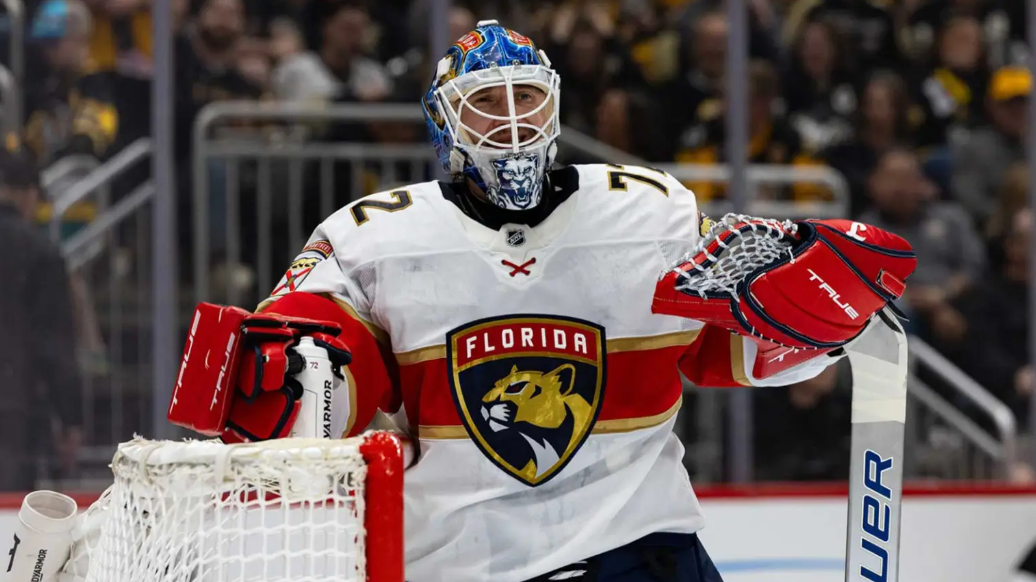
Florida essentially had to rebuild its goaltending tandem during the offseason. Both Sergei Bobrovsky and Daniil Tarasov entered unrestricted free agency, and neither will return to the Panthers.
Tarasov signed a one-year deal with the Detroit Red Wings, where he is expected to serve as John Gibson’s backup. Bobrovsky, meanwhile, signed a three-year contract with the Toronto Maple Leafs, bringing an end to his lengthy run in Florida.
Bobrovsky leaves behind an impressive legacy with the Panthers. His tenure included two Stanley Cups and multiple seasons in which he received Vezina Trophy consideration. Replacing that experience and postseason pedigree will be no easy task.
Florida is turning to Markstrom, who was originally drafted by the Panthers in the 2008 NHL Draft. The veteran goaltender is coming off an inconsistent stint with the Devils, who acquired him with hopes that he could help push the team toward Stanley Cup contention. That run never materialized into a deep championship push.
Markstrom’s projected backup is 26-year-old Akira Schmid. Schmid spent time with New Jersey earlier in his career before eventually becoming a depth option with the Vegas Golden Knights behind Carter Hart.
On paper, both goaltenders are capable of making the saves Florida needs. Neither enters the season as an obvious elite-level netminder, but both have shown they can win games and potentially steal one when everything is on the line.
That makes the tandem something of a boom-or-bust situation.
Markstrom has the experience to provide quality starts, but his performance has also been inconsistent. Schmid has demonstrated significant potential, particularly during his strong stretch with New Jersey in 2022-23. Outside of that period, however, his NHL results have been less convincing.
As a result, Florida is placing considerable trust in its new goaltending duo to provide steady play and avoid costly mistakes.
That gamble could pay off. But for a Panthers roster that otherwise appears capable of competing for another Stanley Cup, goaltending stands out as the biggest potential weakness heading into the 2026-27 season.
Leave a Reply