

Why Collin Klein Is Well Positioned to Lead Kansas State Football
Collin Klein enters his first season as Kansas State’s head coach with a unique blend of program history, coaching experience, and deep ties to the Wildcats, making his return one of the most compelling storylines in college football.
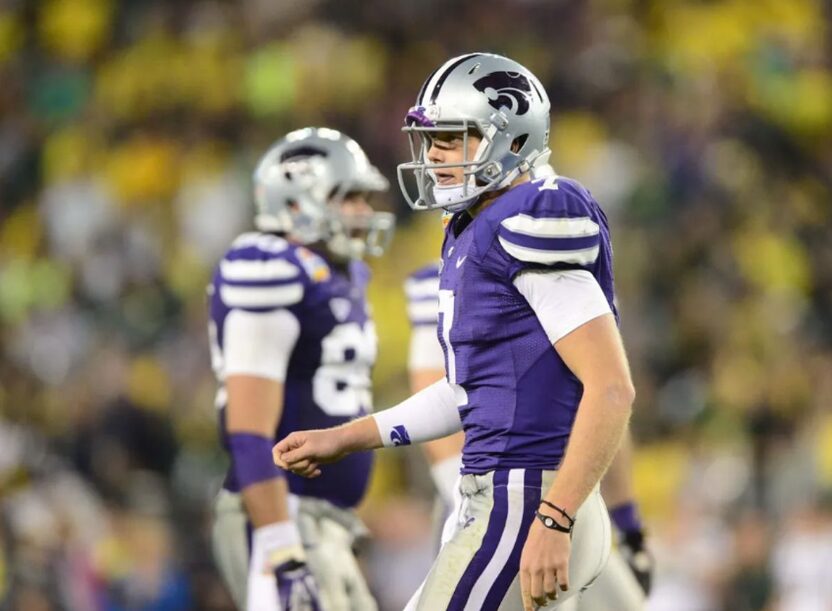
While many fans remember Klein as one of the finalists for the 2012 Heisman Trophy, his legacy at Kansas State extends far beyond that recognition. During his standout career at quarterback, he accounted for 40 total touchdowns in 2011 and 39 more in 2012, leading the Wildcats to 10-3 and 11-2 records. His leadership helped guide Kansas State to an 11-1 regular season and a share of the 2012 Big 12 championship, one of the most successful campaigns in school history.
Although Johnny Manziel ultimately captured the Heisman Trophy that year and Manti Te’o’s remarkable season dominated national headlines, Klein quietly established himself as one of the defining players in Kansas State football history through his consistency, toughness, and leadership.
A Natural Fit for the Wildcats
Klein’s return to Manhattan felt inevitable to many around the program. At his introductory press conference, athletic director Gene Taylor joked that hiring Klein was “the worst-kept coaching secret in America,” noting that fans expected the former Wildcat star to eventually lead his alma mater.
Few coaching hires in college football seem as closely aligned with a program’s identity. Kansas State’s culture has long been built on discipline, player development, and consistency—qualities Klein embodied as both a player and assistant coach.
Following a Proud Tradition
Kansas State’s rise to national relevance is one of college football’s greatest turnaround stories. Before Bill Snyder arrived in 1989, the Wildcats spent decades as one of the nation’s struggling programs, producing relatively few winning seasons throughout most of their history.
Snyder transformed Kansas State into one of the Big 12’s most consistent programs, establishing a winning culture that continued under Chris Klieman. Since Snyder’s arrival, the Wildcats have regularly competed for conference championships and become a perennial postseason contender.
Klieman also enjoyed considerable success, leading Kansas State to five seasons with at least eight wins in seven years and delivering the program’s first Big 12 title since 2012 with the conference championship in 2022.
Now Klein inherits a stable, successful program while carrying the responsibility of maintaining the standard established by Snyder and sustained under Klieman.
Offensive Success and Adaptability
Klein also brings an impressive coaching résumé to his new role.
As Kansas State’s offensive coordinator in 2022, he oversaw one of the nation’s top rushing attacks, with the Wildcats averaging nearly 210 rushing yards per game en route to the Big 12 championship. His physical, balanced offensive philosophy became a hallmark of that title-winning team.
After spending the past two seasons as Texas A&M’s offensive coordinator, Klein further demonstrated his versatility by helping engineer an offense that averaged roughly 260 passing yards per game and guided the Aggies to their first College Football Playoff appearance.
His ability to tailor an offense to his personnel reflects the flexibility that has long defined successful Kansas State teams, from the powerful rushing attacks of his playing days to the explosive passing offenses featured during other eras.
An Exciting New Era
At just 36 years old, Klein returns to Manhattan with experience as both a successful player and a proven offensive coach. His familiarity with the program’s culture, combined with his recent experience coaching at the highest level of college football, gives Kansas State a leader who understands both its traditions and its future ambitions.
The Wildcats have enjoyed remarkable consistency over the past three decades, but the expanded College Football Playoff presents new opportunities for programs like Kansas State to compete on the national stage. Klein now has the chance to build on the foundation established by his predecessors while pursuing accomplishments that could elevate the program to even greater heights.
Leave a Reply