
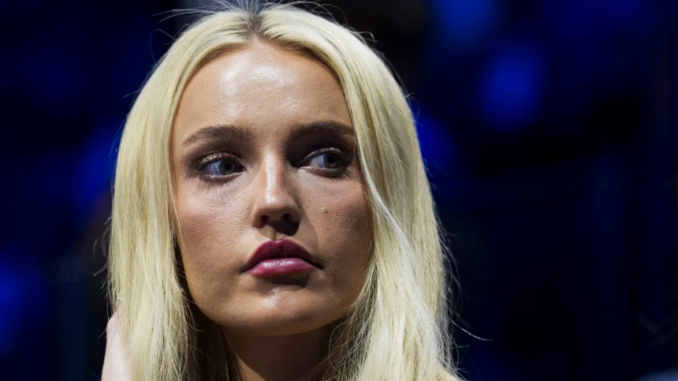
Morgan Riddle Draws Criticism Over Comments About Female Sports Fans
Morgan Riddle was introduced to the tennis world through her relationship with Taylor Fritz in 2020. From there, she developed a sizable platform centered on fashion, lifestyle, pop culture, and the experience of following professional tennis.
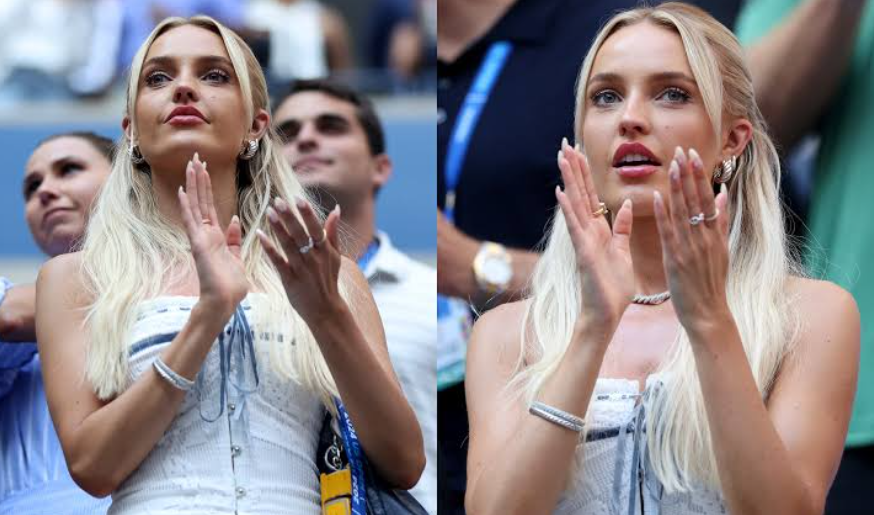
Now, nearly six years later, Riddle has found herself at the center of controversy after making comments about how women become sports fans.
Riddle explained that women shouldn’t feel pressured to prove their fandom by memorizing statistics or knowing every player.
“The 400 Club welcomes women into sports in any way that they want,” Riddle said. She argued that men have traditionally created the expectation that being a legitimate sports fan requires extensive knowledge of players, numbers, and statistics.
She added that her own path into sports was different, saying she became interested through pop culture, media, and fashion rather than immediately immersing herself in statistics and analytics.
However, the comments quickly drew criticism online. Some fans felt her remarks unintentionally suggested that female fans are more likely to follow sports for appearances, fashion, or entertainment rather than genuine interest in competition.
The criticism was especially notable given Riddle’s own content, which has frequently focused on fashion, “Get Ready With Me” videos, player-box experiences, tournament food recommendations, and life surrounding tennis rather than detailed match analysis.
Influencer Debate Adds Fuel
Riddle’s comments arrived amid another controversy involving influencers at this year’s US Open.
During Naomi Osaka’s opening-round match against Anastasia Zakharova, content creators in a hospitality area reportedly made noise and used a ring light near the court. The activity became disruptive enough that the chair umpire stepped in.
Riddle later defended influencers during an interview with Us Weekly connected to her partnership with 7UP. She argued that most people attending the US Open take photographs and create content, with the possible exception of some longtime, traditional tennis fans.
Her defense comes at a time when the US Open is increasingly embracing the creator economy. The USTA accredited roughly 100 content creators for the 2026 tournament, nearly twice the number from the previous year, when approximately 54 creators received accreditation.
As influencers become a larger part of major sporting events, the conversation over who gets to participate in and define sports culture has become increasingly heated.
Fans Push Back Against Riddle
Riddle’s comments generated plenty of strong reactions online.
“Is she for real,” one fan questioned, reflecting the frustration among people who felt her remarks overlooked women who follow sports closely and have extensive knowledge of statistics, players, and tactics.
Another critic wrote, “So she just likes events and being seen, not the actual games being played.”
Others took aim at Riddle’s personal connection to tennis. One commenter joked, “Well at least one player she knew the name,” referencing her nearly six-year relationship with Fritz. The American star was eliminated in the third round of this year’s US Open after losing to Francisco Cerúndolo.
Another fan bluntly wrote, “Her gateway was dating Taylor Fritz,” pointing back to Riddle’s introduction to professional tennis through their relationship in 2020.
A fifth critic summed up the broader frustration by writing, “Influencers ruin everything they touch.”
That sentiment was also connected to the Osaka match, where the presence and behavior of influencers had already sparked complaints about whether content creation was beginning to interfere with the traditional fan experience.
Ultimately, the controversy surrounding Riddle highlights a much larger debate. As professional tennis increasingly welcomes influencers and online creators, questions about authenticity, access, and what qualifies someone as a “real” sports fan are becoming harder to avoid.
With nearly 100 creators accredited at this year’s US Open, that conversation is unlikely to disappear anytime soon.
Leave a Reply